Worked example
Replacement operator panel for an imported machine
A new panel that fits the old hole and cable, with every control where operators expect it.
Not a past job. This is how we would build it.
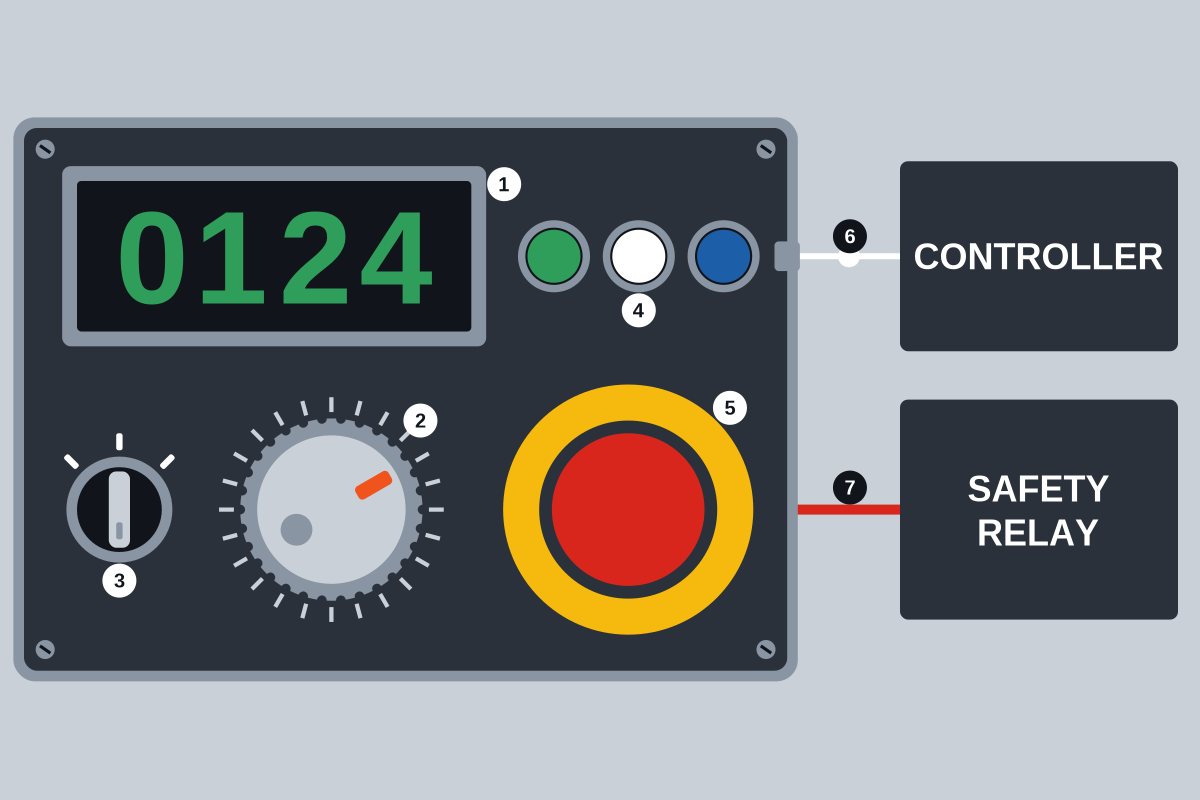
- Display
- Jog wheel
- Key selector
- Push buttons
- Emergency stop
- Data line to the controller (RS‑485)
- Hard-wired stop line
- Who it is for
- A plant whose imported machines have no panel supplier left.
- Mechanism
- Machined aluminium front plate, 3D-printed bezel, bent-sheet back box.
- Electronics
- STM32G0 board, RS-485 to the controller, 4.3-inch display, detented jog encoder.
- Firmware
- C, bare metal. Speaks the original protocol.
- Target
- 24 clicks per turn, IP54 to the front.
The situation
Membrane keys wear through and displays go blank. The maker supplies no panel. A sound machine becomes scrap.
How we would build it
Same cut-out, same cable, same protocol. We would not copy the old board; its layout is not interesting, its job is. The new one reads inputs, drives the display and sends RS-485 messages.
Design
Decisions that matter
Learn the protocol from the bus
A logic analyser on a working machine logs every message. You keep the protocol document.
An emergency stop that stays hard-wired
It stays a contact in the safety circuit. The board only reads its state.
A jog wheel that feels right
Operators use it most, so they try a few encoders blind and pick one.
Keys that outlast membranes
Illuminated push buttons rated for a million operations replace them.
Handover
What you would get
- Fitted panels and a spare
- Protocol document with bus captures
- Schematics, PCB files, BOM
- Drawings in DXF and STEP, bezel STL
- Firmware source, flashing procedure
- A one-page fitting instruction